
Dental Bonding
Dental bonding for chipped, uneven, or stained teeth with fast cosmetic improvement.
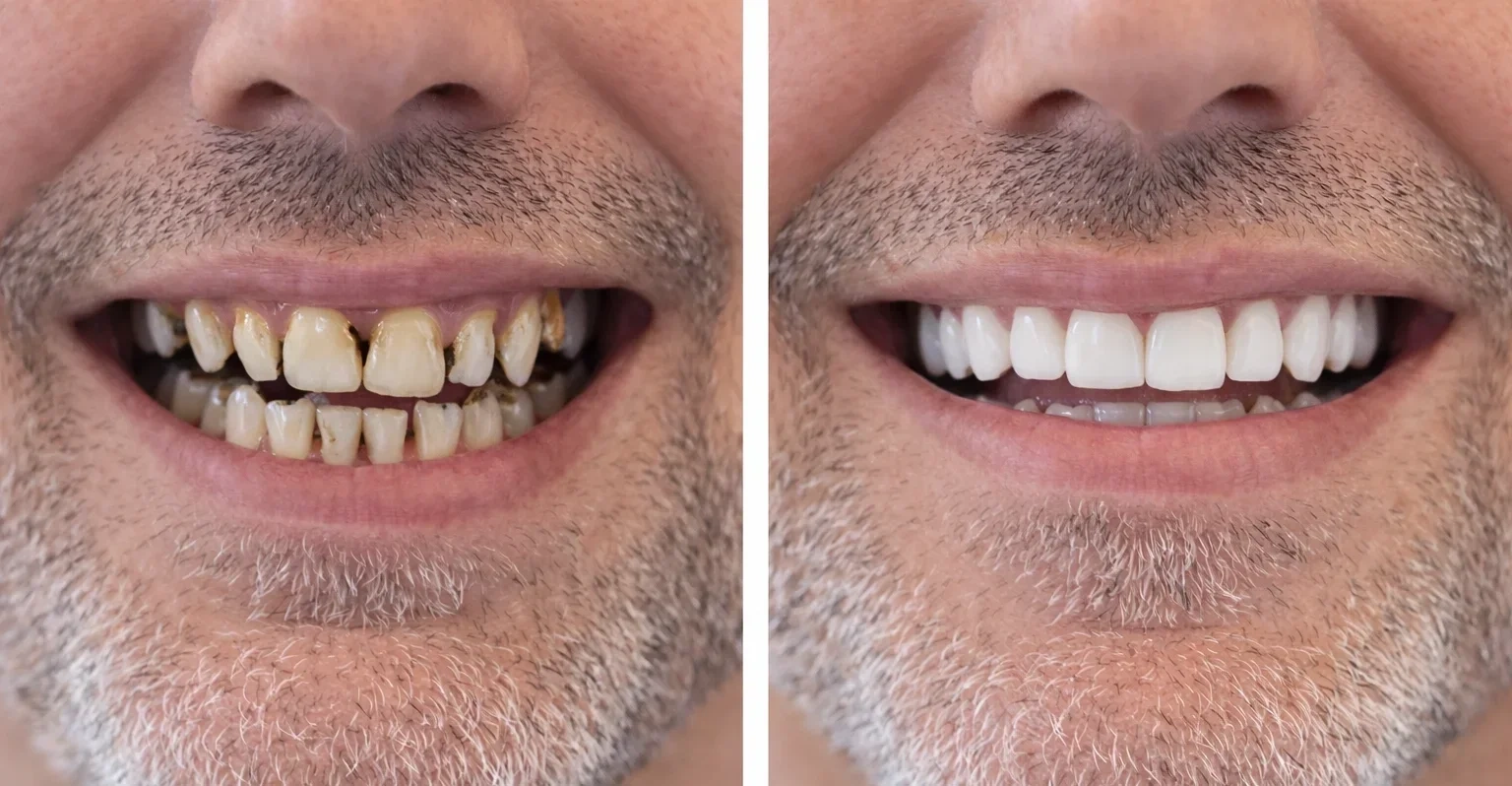
What Is Dental Bonding?
Dental bonding is a cosmetic procedure where a tooth-colored resin is applied to the surface of a tooth to improve its appearance. The resin is sculpted, shaped, and polished to correct imperfections such as chips, cracks, gaps between teeth, uneven edges, discoloration that doesn't respond to whitening, and minor misalignment. It is one of the most affordable and minimally invasive cosmetic dental treatments available.
Unlike veneers, bonding typically requires little to no enamel removal and can often be completed in a single office visit — no lab work, no temporary restorations, and no multiple appointments. While the material is not as stain-resistant as porcelain veneers, modern composite resins offer excellent durability and aesthetics, especially for small to moderate cosmetic corrections.
Benefits of Dental Bonding
Instant Improvement
Transforms chipped or uneven teeth in one visit.
Natural Blend
Color-matched to adjacent teeth.
Quick Procedure
Usually completed in one visit.
Strengthens Tooth
Resin adds a protective layer.
- Minimally invasive — little to no enamel removal needed
- No lab required — done in-house in a single appointment
- Cost-effective — more affordable than veneers or crowns
- Reversible — preserves your natural tooth structure
What to Expect — Dental Bonding Procedure
- Consultation and shade selection — we discuss your goals and choose a composite shade that matches your teeth.
- Tooth preparation — minimal surface etching to create a rough texture for strong bond adhesion.
- Bonding agent applied — a liquid adhesive is painted on and hardened with a curing light.
- Composite resin sculpted — the resin is carefully applied, shaped, and layered to achieve the desired contour.
- Curing — each layer is hardened with a curing light.
- Final shaping and polishing — the bonded area is trimmed, contoured, and polished to a smooth, natural finish.
How to Care for Dental Bonding
- Brush twice daily with a non-abrasive fluoride toothpaste.
- Floss gently around the bonded area to avoid lifting the edges.
- Avoid biting fingernails, chewing ice, or opening packages with your teeth.
- Limit staining foods and drinks — bonding can stain over time.
- Do not smoke — tobacco stains composite resin heavily.
- Visit your dentist for regular checkups to monitor the bonding for wear or chipping.
- Consider touch-up or replacement every 3–5 years as resin may naturally wear over time.
Key Features of Our Dental Bonding Service
- Single-visit cosmetic correction — no waiting or temporary restorations
- No anesthesia needed in most cases
- Custom color-matched to your natural tooth shade
- Repairs chips, cracks, gaps, stains, and uneven teeth
- Minimal preparation — preserves healthy enamel
- High-quality nano-hybrid composite for lasting results
- Affordable alternative to veneers for minor cosmetic issues
- Quick recovery — eat and smile normally immediately
What Dental Bonding Can Fix
Dental bonding is one of the most versatile cosmetic treatments because a single tooth-colored resin can be shaped to address many everyday imperfections. During your consultation, Dr. Bistritz examines each tooth and explains whether bonding is the most conservative way to reach your goals. Common concerns that bonding can improve include:
- Chipped or cracked teeth — resin is added and sculpted to rebuild a missing edge and restore a smooth, even shape.
- Gaps between teeth — small spaces can be closed or narrowed without braces or aligners.
- Discoloration or stains — isolated spots that do not respond to professional teeth whitening can often be covered and blended in.
- Misshapen or short teeth — uneven or worn teeth can be built up for a more balanced, symmetrical look.
- Minor reshaping — pointed or slightly irregular edges can be contoured for a softer, more natural appearance.
- Protecting exposed roots — resin can cover a small area of root exposed by receding gums to help reduce sensitivity.
Dental Bonding vs. Veneers
Both dental bonding and veneers can noticeably improve the look of your smile, but they suit different situations. Bonding is the more conservative option: the tooth-colored resin is applied directly to your tooth, usually in a single visit, with little or no enamel removal, which also tends to be more affordable. It is often ideal for small chips, minor gaps, and single-tooth touch-ups.
Veneers are custom porcelain shells bonded to the front of the teeth. They typically require more preparation and more than one visit, but they usually last longer and resist stains better than composite resin, which makes them a popular choice for a full smile makeover. There is no single right answer for everyone — Dr. Bistritz will review the condition of your teeth, your budget, and the look you want, then help you choose the treatment that fits you best.
The Dental Bonding Process, Step by Step
- Consultation and shade selection — Dr. Bistritz reviews your goals, examines the tooth, and uses a shade guide to choose a composite color that blends with your natural teeth.
- Lightly preparing the tooth surface — the surface is gently etched and a bonding liquid is applied so the resin adheres securely. This step typically needs no anesthesia for simple cosmetic bonding.
- Applying and sculpting the resin — the tooth-colored resin is placed in thin layers and carefully shaped to rebuild or reshape the tooth for a natural contour.
- Curing with a special light — each layer is hardened with a curing light so the material bonds firmly to the tooth.
- Polishing to a natural finish — the bonded area is trimmed, smoothed, and polished so it blends in with your surrounding teeth and feels comfortable against your bite.
Caring for Your Bonded Teeth
Bonded teeth are easy to look after, and a few simple habits help your results stay bright and intact. Because composite resin can chip or stain more readily than porcelain, a little everyday care goes a long way.
- Avoid biting hard objects — do not chew ice, pens, or fingernails, which can chip the bonded edge.
- Limit staining foods and drinks — coffee, tea, red wine, and tobacco can gradually discolor resin over time.
- Brush and floss normally — keep up your usual twice-daily brushing and daily flossing to protect the tooth underneath.
- Keep routine checkups — regular professional cleanings and exams let Dr. Bistritz monitor the bonding for wear or chipping.
- Touch-ups are simple — if bonding chips or stains, it can typically be touched up or repaired without replacing the whole restoration.
Dental Bonding Questions


Contact Aventura Dental Center
Call us at (305) 933-2501 or email info@aventuradentalcenter.com to schedule your dental bonding consultation.