All-on-4 Implants vs Dentures: Which Is Right for You?
A replacement that feels right for someone else may not fit your needs. When comparing All-on-4 implants vs dentures, think about how you want your teeth to feel during meals, how you’d prefer to clean them, and whether you’re comfortable considering surgery. Traditional dentures sit on the gums and are removed for care. All-on-4 teeth stay fixed on implants, while snap-in dentures combine implant support with a removable design. Healing, maintenance, and costs vary from person to person. A dental consultation can help you understand what may be appropriate for your oral health and what to expect over time. Here’s a practical look at the differences.
Key Takeaways
- Match the option to your daily preferences: Decide whether fixed teeth, removable dentures, or implant-retained removable dentures best fit your comfort and cleaning routine.
- Get an evaluation before choosing implants: Ask your dentist to assess your gums, jawbone, medical history, and treatment needs.
- Compare long-term costs and care: Request an estimate that includes follow-up visits, maintenance, repairs, and possible replacements.
What Are All-on-4 Implants and Dentures?
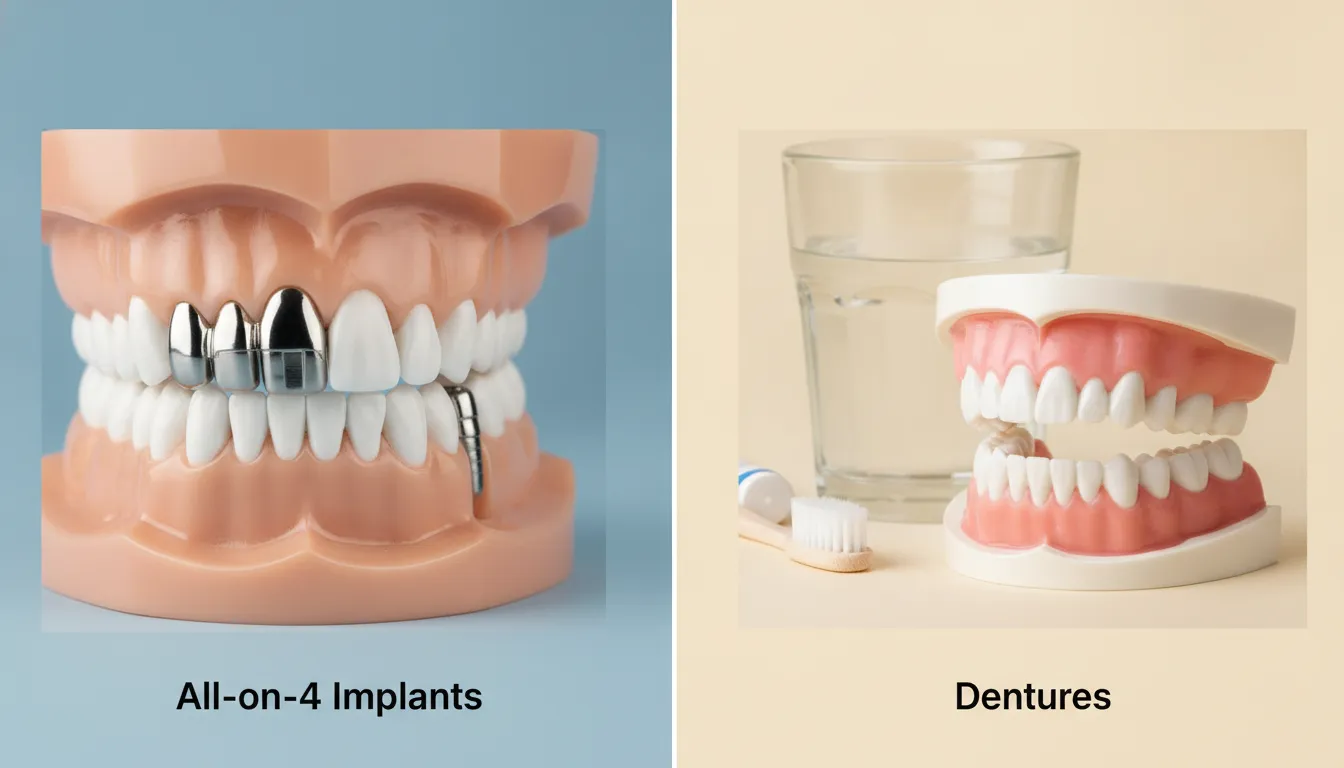
All-on-4 implants and dentures can replace a full arch of missing teeth, but they stay in place in different ways. All-on-4 supports fixed teeth with implants, traditional dentures rest on the gums, and snap-in dentures attach to implants but remain removable.
All-on-4 Implants Support Fixed Full-Arch Teeth
All-on-4 treatment uses four dental implants, often made of titanium, to support a full arch of replacement teeth. The implants are placed in the jawbone, where they can bond with the bone over time. The prosthesis is designed to stay fixed in place rather than be removed at home. Learn more about dental implant services at Aventura Dental Center.
The treatment plan depends on factors such as your oral health and jawbone. A dental exam and imaging can help your dentist assess your needs and explain possible options. All-on-4 may not be right for everyone, so ask about the steps involved, healing, and ongoing care.
Traditional Dentures Rest on the Gums
Traditional dentures are removable appliances that replace some or all missing teeth. Full dentures replace an entire upper or lower arch; partial dentures fill gaps when some natural teeth remain. They rest on the gums and stay in place through their fit, suction, or, in some cases, denture adhesive. You can remove them for cleaning and follow your dentist’s guidance on when to take them out.
Unlike implant-supported options, traditional dentures do not require implant placement. Their fit can change as the mouth changes, so regular dental visits help your dentist check for looseness or discomfort and discuss adjustments. For a side-by-side overview, read this guide to traditional dentures and All-on-4.
Implants Retain Snap-In Dentures
Snap-in dentures are removable dentures that connect to small attachments on dental implants. The attachments can provide more retention than a denture that rests on the gums alone. Many designs use two to four implants per jaw, though the number and placement depend on the individual treatment plan.
You can take snap-in dentures out for cleaning, and the attachments may need maintenance over time. Although implants can help the denture feel more secure, snap-in dentures are not fixed teeth and may still move. A dentist can explain how this option compares with a fixed prosthesis and conventional dentures. See this overview of snap-in dentures and All-on-4.
How Do They Compare in Stability, Chewing, and Comfort?
All-on-4 implants, traditional dentures, and snap-in dentures differ in how they fit and feel during daily life. A fixed restoration may feel more secure, while removable dentures can be taken out for cleaning. Your experience also depends on your jaw, oral health, healing, and the quality of the fit. These factors are worth discussing with your dentist as you compare options.
Compare Fixed and Removable Fit
All-on-4 uses implants in the jaw to support a fixed full arch of teeth. The restoration stays in place and is removed by a dental professional when needed. This can feel reassuring if you’re concerned about teeth shifting during everyday activities. Learn more about how All-on-4 supports a full arch.
Traditional dentures rest on the gums and are removed for cleaning. Snap-in dentures connect to implants for added retention, but you can still take them out yourself. Each option has a different balance of stability and convenience. Think about which fit and cleaning routine would feel comfortable for you.
How Each Option Affects Eating and Speech
A secure fit can make eating and speaking feel more predictable. All-on-4 teeth are fixed, so they generally don’t shift like a loose denture may. Some people find this makes it easier to enjoy a wider range of foods. Your experience will depend on your healing, bite, and the foods you choose, so follow your dentist’s guidance as you adjust.
Traditional dentures can move during chewing or speaking, especially if their fit changes. Snap-in dentures use implant attachments to help hold them in place, though they remain removable. Any new restoration can take time to get used to. Your dentist can assess the fit and suggest ways to make eating and speaking more comfortable.
How Fit and Comfort Change Over Time
The shape of your gums and jaw can change, which may affect how dentures fit. Traditional dentures may need adjustments, relining, or replacement over time. Snap-in dentures also need regular checks, and their attachment components may require maintenance or replacement. Routine maintenance can help preserve their fit.
All-on-4 restorations don’t rest directly on the gums and leave the roof of the mouth uncovered, which some patients find more natural-feeling. Implants still need careful cleaning and regular dental visits. A consultation with Aventura Dental Center can help you compare treatment options based on your oral health, comfort, and daily routine.
How Do They Affect Oral Health and Jawbone?
How All-on-4 Supports Bone
All-on-4 uses four dental implants to support a fixed set of teeth across the upper or lower arch. The implants are placed in the jawbone, where they can transfer some of the forces from chewing to the bone, similar to natural tooth roots. This stimulation may help preserve bone around the implant sites and support facial structure after tooth loss.
Bone changes can still happen, and outcomes depend on factors such as implant placement, overall health, and daily care. A dentist will assess your mouth and jaw before recommending treatment. Aventura Dental Center provides dental implant services and can explain whether an implant-supported option fits your needs. You can also read about how All-on-4 implants may support bone.
How Traditional Dentures Affect the Jawbone
Traditional dentures rest on the gums and rely on a close fit for support. Since they do not include implants anchored in the jaw, they do not transfer chewing forces to the bone in the same way. After teeth are lost, the jawbone can gradually change in shape and volume. As the gums and jaw ridge change, dentures may feel loose or shift while eating and speaking.
The rate and extent of these changes vary from person to person. Regular dental checkups help your dentist monitor your oral health and assess denture fit. Adjustments, relining, or replacement may be needed over time. A comparison of traditional dentures and implant-supported teeth explains the difference in bone stimulation. If your dentures feel uncomfortable or unstable, ask a dentist to evaluate them rather than trying to adjust them yourself.
What Snap-In Dentures Preserve—and Don’t
Snap-in dentures attach to implants with small connectors. They remain removable for cleaning, but the attachments help keep them more secure than conventional dentures. Because the implants sit in the jawbone, they transfer some chewing force to the bone around those implant sites. This may help preserve bone locally, though it does not provide the same support as a fixed implant-supported arch.
Snap-in dentures also rest on the gums, so other areas of the jaw may continue to change after tooth loss. Bone support varies based on implant number and placement, as well as individual oral health. The attachments need routine care and may require maintenance. Learn more about snap-in dentures compared with fixed All-on-4 teeth, then ask your dentist which option best matches your health, comfort, and daily routine.
What Are the Benefits, Trade-Offs, and Eligibility Factors?
All-on-4 Provides Fixed Teeth but Requires Surgery
All-on-4 uses four implants placed in the jaw to support a fixed set of replacement teeth for a full arch. The teeth stay in place during meals and daily activities, while the implants bond with the jawbone as they heal. This can provide stable support and help maintain bone around the implant sites. Learn more about how All-on-4 supports a full arch.
The trade-off is that treatment involves surgery and a healing period. Your dentist will assess your gums, jawbone, medical history, and overall health before discussing whether implants may suit you. Some patients may need additional procedures, and recovery timelines vary. Ask what the procedure involves, how long healing may take, and how to care for the fixed teeth. Clear answers can help you weigh the day-to-day benefits against the commitment of treatment.
Traditional Dentures Avoid Surgery but May Move
Traditional dentures rest on the gums and don’t require implant surgery. You can remove them for cleaning and while you sleep, which may make daily care straightforward. They can be a practical option for people who prefer to avoid surgery or whose health and personal circumstances call for a non-surgical treatment.
Dentures rely on their fit, suction, or adhesive to stay in place, so they may shift while you eat or speak. The fit can change as the gums and jaw change over time. Adjustments, relines, or replacement may then be needed. Dentures often need relining or replacement every five to ten years, though individual needs vary. This comparison of dentures and All-on-4 offers an overview of their different maintenance needs.
Snap-In Dentures Add Retention and Stay Removable
Snap-in dentures connect to implants with small attachments. They can be removed for cleaning, while the implant connections help keep them more secure than traditional dentures may be. Treatment often uses two to four implants per jaw, depending on the patient’s needs and treatment plan. For some people, this removable option offers a balance between added retention and the convenience of taking the denture out.
Snap-in dentures still require surgery to place the implants, and the attachments need regular care. They may also need maintenance or replacement over time. Removing and reinserting the denture can take practice at first. Your dentist can explain how this option compares with fixed teeth and conventional dentures, including the care each requires. This overview of snap-in dentures and All-on-4 outlines the main differences.
Consider Health, Bone, Healing, and Expectations
The right choice depends on more than whether you want fixed or removable teeth. Your dentist will consider your gum health, any remaining teeth, jawbone condition, medical history, medications, and ability to heal after treatment. Your budget, daily routine, and preferences for eating and cleaning also matter. If you’re considering implants, an examination helps determine whether your jaw can support them or whether additional treatment may be needed.
Use your consultation to discuss recovery, long-term care, expected results, and costs. Ask whether bone grafting or other procedures may be recommended, and how each option may affect eating, speaking, and cleaning. A dental assessment can help you compare suitable treatments and make an informed choice. Aventura Dental Center offers comprehensive dental services and can explain options based on your oral health and goals.
What Do All-on-4 and Dentures Cost Over Time?
The upfront price is only one part of comparing All-on-4, traditional dentures, and snap-in dentures. Each option can involve different treatment, maintenance, and repair costs over time. Your total depends on your oral health, the materials selected, and any additional care you need. A dental consultation can help you understand which costs may apply to you.
Initial Treatment and Procedure Costs
All-on-4 usually has a higher initial cost than traditional dentures because it includes implant surgery and a full-arch prosthesis. One dental practice estimates All-on-4 at $20,000 to $30,000 per arch, but costs vary by provider, location, materials, and individual needs. This range is a general reference, not a quote for treatment in Aventura. Traditional dentures typically cost less upfront and do not require implant surgery. Snap-in dentures combine a removable denture with implants and attachments, so their cost may fall between the two. The cost comparison from Almost Heaven Dentistry explains some of these differences. Request an itemized estimate that includes imaging, extractions, temporary teeth, and the final prosthesis.
Relines, Repairs, Replacements, and Implant Parts
Dentures may need adjustments as the gums and jaw change. Traditional dentures can require relines, repairs, or replacement. Snap-in dentures also have attachments that may wear and need servicing. Include these possible expenses in your comparison, rather than focusing only on the initial price.
All-on-4 teeth stay fixed in place, but the prosthesis and implant components still need care and may require repair or replacement. The All-on-4 overview from TruYou Dental notes that the prosthesis may need maintenance over time. Ask your dentist how often to schedule checkups and what routine maintenance or repairs might cost. Regular visits help your dental team monitor your implants, gums, and prosthesis.
Insurance, Financing, and Fee Factors
Dental insurance coverage varies by plan and procedure. Your policy may cover dentures, implants, extractions, and related services differently. Before treatment, ask your insurer and dental office to review your benefits, identify services that may be covered, and estimate your out-of-pocket costs.
Financing may let you spread payments over time. Review the payment schedule, terms, and any fees before choosing a plan. Your estimate may also depend on bone health, extractions, preparatory care, and the materials used. A consultation at Aventura Dental Center can help you discuss treatment options and costs based on your needs. The All-on-4 and denture guide also highlights the importance of considering personal health and suitability when comparing treatments.
How Do Care and Longevity Compare?
All-on-4 restorations, traditional dentures, and snap-in dentures each need regular care, but the daily routine depends on whether the teeth stay in place or come out for cleaning. Your dentist can recommend the right tools and checkup schedule for your mouth and restoration.
Clean Fixed All-on-4 Teeth and Beneath the Prosthesis
An All-on-4 prosthesis stays in place, so you cannot remove it for everyday cleaning. Brush it carefully, including along the gumline, and clean beneath it using tools your dentist recommends. A floss threader or water flosser may help reach areas a toothbrush can miss. Your dental team can show you how to clean around the implants without irritating your gums.
Professional cleanings and routine checkups matter, too. Your dentist can examine the prosthesis, implants, and surrounding tissues, and address concerns before they become more difficult to manage. All-on-4 is not maintenance-free, even though the teeth are fixed. Ask your dentist to demonstrate a routine that suits your restoration, and review Aventura Dental Center’s dental implant services to learn more about implant care.
Remove and Care for Traditional Dentures
Traditional dentures rest on your gums and need to be removed for cleaning. Rinse them after meals when you can, then gently brush them with a denture brush and a cleaner made for dentures. Regular toothpaste may be too abrasive, so ask your dentist which products to use. Clean your gums, tongue, and any remaining natural teeth as part of your daily routine.
Your dentist may also recommend soaking your dentures overnight, depending on the denture and your care plan. Changes in your gums and jaw can affect the fit over time, so a denture may need an adjustment, reline, or replacement. Keep regular appointments, and let your dentist know if it feels loose or causes sore spots. This comparison of dentures and All-on-4 explains why removable dentures may need adjustments as the mouth changes.
Clean Snap-In Dentures and Maintain Attachments
Snap-in dentures attach to implants but can be removed for cleaning. Take the denture out as directed, then clean it and your mouth. Pay close attention to the areas around the implant attachments, where food and plaque can collect. Your dentist can show you which brush or cleaning method to use and advise whether to wear the denture overnight.
The attachments that secure a snap-in denture can wear over time and may need adjustment or replacement. Regular visits give your dental team a chance to check the denture, attachments, implants, and surrounding tissues. If the denture feels less secure or becomes uncomfortable, arrange an assessment rather than trying to adjust it yourself. Read this guide to snap-on dentures and All-on-4 implants for more detail on how removable implant-supported dentures are cared for.
Compare Lifespans, Checkups, and Repairs
Traditional dentures often need relining or replacement as the mouth changes. One commonly cited estimate is every five to 10 years, though the timing depends on fit, wear, and individual needs. All-on-4 implants may last 20 years or more with proper care, but the prosthesis attached to them can wear, chip, or need repair sooner. The implants and the restoration have different lifespans, so ask your dentist what to expect for each.
Snap-in dentures also need ongoing care, including checks of the denture and its attachments. No option lasts indefinitely or avoids maintenance. Oral hygiene, overall health, fit, and regular follow-up all play a role. Keep scheduled appointments and contact your dentist if you notice looseness, discomfort, or a change in how an attachment feels. These lifespan ranges are general estimates, not guarantees, as noted in this overview of denture and All-on-4 longevity.
Which Option May Suit You?
There is no single tooth-replacement option that works for everyone. The right choice depends on your oral health, jawbone, medical history, budget, and what you want from daily life. A dentist can examine your mouth and talk through the benefits and trade-offs of each approach.
Weigh Stability, Health, Lifestyle, and Budget
All-on-4 implants support a fixed full arch of teeth. Traditional dentures rest on the gums and come out for cleaning, while snap-in dentures attach to implants for added stability but remain removable. Consider which fit best matches your preferences: a fixed restoration, a removable appliance, or a removable option with extra retention.
Your health and jawbone also matter. An Aventura dentist can assess whether implants may be suitable and explain any steps that could affect treatment time or cost. Think about how you feel about surgery, how you want to clean your teeth, and what you can comfortably budget for both treatment and future care. This comparison of All-on-4 and dentures can help you organize your questions, but an exam is needed to assess your individual needs.
Questions to Ask an Aventura Dentist
A consultation gives you time to understand your options and share what matters most to you. Tell your dentist about medical conditions, medications, past dental work, and any concerns about treatment. Ask whether your gums and jawbone are suitable for implants, what alternatives are available, and what the treatment timeline may involve.
It’s also useful to ask about the total cost, insurance, payment options, cleaning routines, and possible repairs or replacements. If you’re considering All-on-4, ask how the fixed teeth will be cleaned and what follow-up visits are recommended. Aventura Dental Center offers implant and denture services, and its team can discuss options based on your oral health, preferences, and budget.
Related Articles
- All-on-4 Implants vs. Traditional Dentures: Which Is Right for You?
- Snap-On Dentures vs. All-on-4 Dental Implants
- Full Mouth Dental Implants vs. Snap-In Dentures vs. Traditional Dentures: What You Need to Know
- All-on-4 vs. Dentures: Which Is Best for You?
Frequently Asked Questions
Are All-on-4 implants the same as snap-in dentures?\ No. All-on-4 supports a full arch of teeth that stays fixed in place and is removed by a dental professional when needed. Snap-in dentures attach to implants for added retention, but you can remove them yourself for cleaning.
Can anyone get All-on-4 implants?\ Not everyone is a candidate. A dentist will assess your gums, jawbone, medical history, medications, and ability to heal before recommending implants. An exam and imaging can help determine which options may suit you.
Do dentures or All-on-4 implants help preserve the jawbone?\ Implants transfer some chewing force to the bone around them, which may help maintain bone in those areas. Traditional dentures do not provide this implant support, and jawbone changes can affect their fit over time. Individual results vary.
Which option costs less over time?\ Traditional dentures usually cost less at the start, while All-on-4 and snap-in dentures involve implant treatment. Future costs may include denture adjustments, attachment maintenance, or repairs to a prosthesis. Ask for an itemized estimate that includes treatment and possible follow-up care.
How do I choose between All-on-4 and dentures?\ Consider whether you prefer fixed or removable teeth, your health and jawbone, cleaning needs, budget, and comfort with surgery. A consultation at Aventura Dental Center can help you compare options based on your oral health and daily routine.